
Description
Description
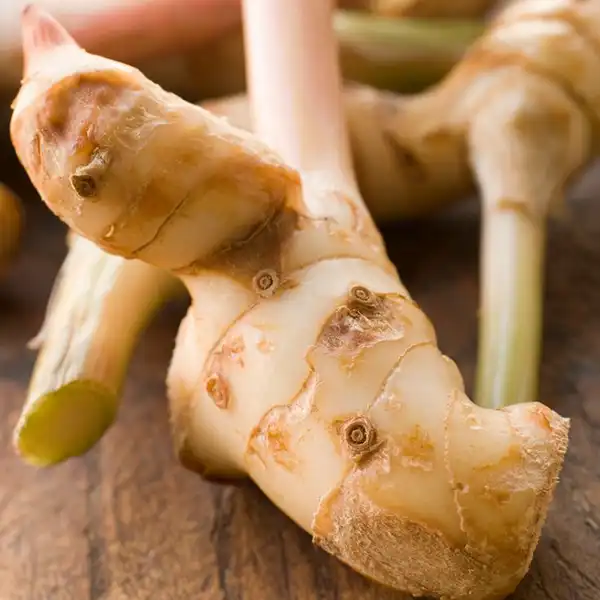
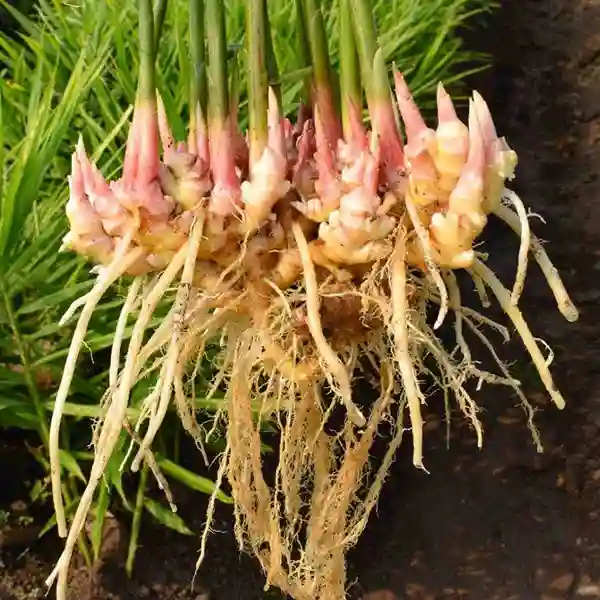
Galangal is a rhizome closely related to ginger and turmeric, known for its sharp, citrusy, and slightly pine-like flavor. It has a tough, pale skin with a firm, creamy interior. Widely used in Southeast Asian cuisine, galangal adds a unique aromatic and spicy note to soups, curries, and sauces.
Growing Method
Galangal thrives in warm, tropical climates with rich, well-drained soil and partial shade. It is propagated from rhizome cuttings planted in loose soil with consistent moisture. The plant requires a frost-free environment and matures in about 8–10 months.
Nutritional Value
Galangal contains antioxidants, anti-inflammatory compounds, and essential oils that aid digestion and support immune health. It is rich in vitamins and minerals like vitamin C and potassium.
Culinary Use
Galangal is commonly sliced or pounded and added to dishes such as Thai soups (like Tom Yum), curries, and marinades. Its bold flavor complements seafood, poultry, and vegetables, imparting a distinct zest and warmth.
Storage & Care
Store fresh galangal rhizomes in the refrigerator wrapped in a paper towel inside a plastic bag for up to 2 weeks. It can also be peeled, sliced, and frozen for longer preservation.