

Description
Description
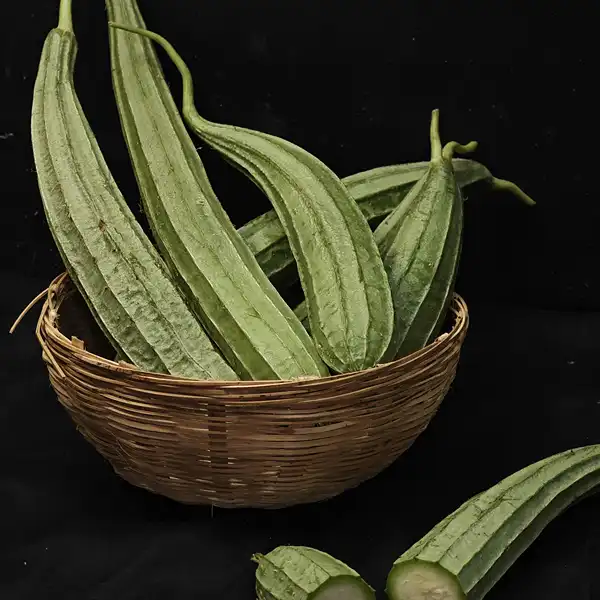
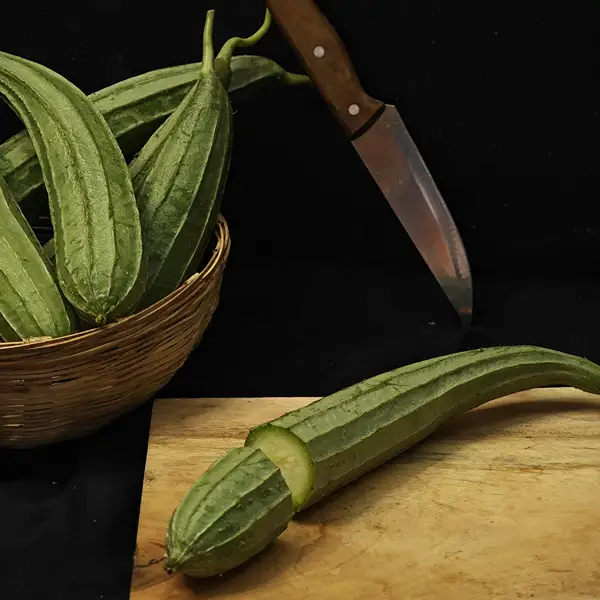
Ridge gourd, also known as jika, turai, or luffa, is a long, slender green vegetable with distinct ridges running along its length. Its skin is rough and ridged, while the inner flesh is soft, spongy, and mildly flavored. Ridge gourd is highly valued in Indian cuisine for its light, cooling properties and ease of digestion. It blends well with spices and is commonly used in everyday vegetarian cooking. Its subtle taste and high water content make it ideal for curries, chutneys, and stir-fries.
Growing Method
Ridge gourd is a fast-growing vine that thrives in warm, humid climates and requires full sunlight. It prefers fertile, well-drained loamy soil enriched with compost or organic manure. Grown from seeds, the plant needs trellising or support for healthy vine growth and better air circulation. Regular watering and weeding help promote better yield. Fruits are usually ready for harvest within 45–60 days of sowing, when they are still young and tender.
Nutritional Value
Ridge gourd is low in calories and high in dietary fiber, making it excellent for digestion and weight management. It is a good source of vitamin C, vitamin A, iron, magnesium, and antioxidants. Its high water content helps in hydration, while its detoxifying properties support liver function and skin health. It is especially recommended in light diets and during illness for its gentle, nourishing effect on the body.
Culinary Use
Ridge gourd is widely used in Indian cooking, particularly in dishes like curries, dals, chutneys, and dry sabzis. It is often cooked with onions, tomatoes, and minimal spices to let its natural taste shine. In South India, it’s used to make beerakaya curry or peerkangai thogayal (chutney from its peel). It pairs well with moong dal, coconut, garlic, and cumin. Due to its soft texture, it’s best cooked just until tender and not overcooked.
Storage & Care
Store ridge gourd in the refrigerator’s vegetable compartment, unwashed, in a perforated bag. It remains fresh for 4–5 days. Choose young, firm gourds without blemishes or soft spots. Avoid storing near ethylene-producing fruits like bananas. Wash just before use. If the gourd becomes fibrous or hard, it’s overripe and should not be used for cooking.


