
Description
Description
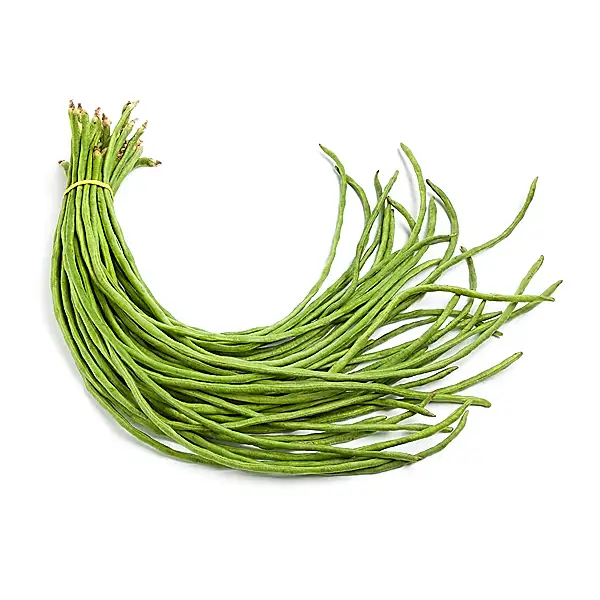
Long beans, also known as yardlong beans, asparagus beans, or snake beans, are a legume variety prized for their slender, elongated pods that can grow up to 18–30 inches in length. With a tender yet crisp texture, they offer a mild, slightly sweet, and earthy flavor that intensifies when cooked. Unlike common green beans, long beans maintain their firmness and shape during stir-frying or sautéing, making them a favorite in Asian, African, and tropical cuisines. Known locally in various cultures—such as “Nesera” in some Indian regions—these beans are a staple vegetable, celebrated for their adaptability and nutritional value.
Growing Method
Long beans are grown from seeds and thrive in warm, tropical to subtropical climates. They prefer well-drained, fertile soil rich in organic matter, with a pH between 6.0 and 7.5. As a climbing vine, long beans require trellising or support to grow vertically, which also promotes air circulation and healthy pod development. Sown directly into the soil after the last frost, the plants grow quickly and begin producing pods within 60–75 days. Regular watering, full sun exposure, and pest control are important for optimal yields. Harvesting is done frequently to encourage continued production and to ensure the pods remain tender and edible.
Nutritional Value
Long beans are low in calories yet rich in dietary fiber, making them excellent for digestion and satiety. They provide essential nutrients like vitamin A, vitamin C, folate, iron, magnesium, and potassium. Their high antioxidant content supports immune health and reduces inflammation. Additionally, long beans are a good plant-based source of protein, making them beneficial in vegetarian and vegan diets. Their mineral profile supports heart health, while their fiber helps regulate blood sugar levels and cholesterol.
Culinary Use
Long beans are versatile in the kitchen and can be used in a variety of savory dishes. They are commonly chopped into shorter segments and stir-fried, sautéed, steamed, or added to curries, stews, and soups. Their firm texture makes them ideal for high-heat cooking without becoming mushy. Long beans are a staple in Southeast Asian dishes like Thai stir-fries and Indonesian sambals, as well as in Indian subzis (vegetable curries) and dals. They pair well with ingredients like garlic, chilies, onions, tomatoes, coconut, and tamarind. They can also be pickled or used in mixed vegetable dishes and rice preparations.
Storage & Care
Fresh long beans should be stored unwashed in a loosely closed plastic or mesh bag in the refrigerator’s vegetable drawer, where they can last for up to 5–7 days. For best flavor and texture, use them while still firm and vibrant green. Avoid storing with moisture, as it can lead to mold or sliminess. If beans become limp or discolored, they are past their prime. For long-term use, long beans can be blanched and frozen, or dried and stored for soups and broths. Wash thoroughly before use to remove any surface dirt or residue.