


Description
Description
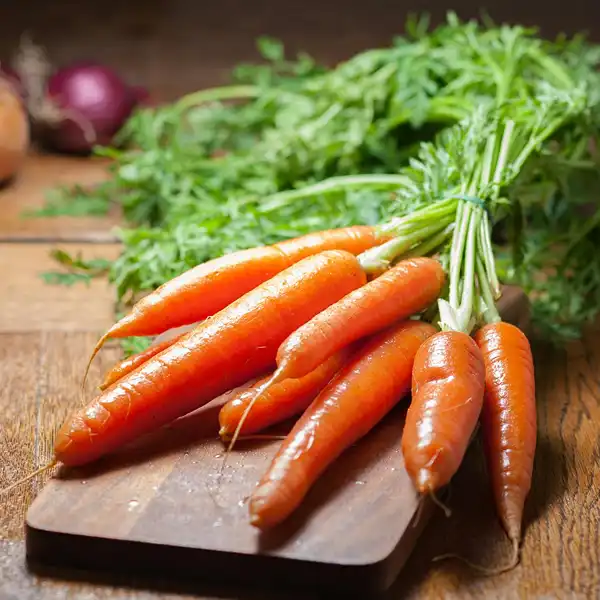
Carrot is a root vegetable known for its vibrant orange color, though varieties exist in purple, red, yellow, and white. It has a sweet, earthy flavor and a crunchy texture when fresh. Carrots are widely consumed raw, cooked, or juiced and are valued for their versatility and nutritional benefits.
Growing Method
Carrots grow best in loose, well-drained soil that is free of stones to allow straight root development. They require full sun and consistent moisture. Seeds are sown directly into the ground and typically take 60–80 days to mature. Thinning seedlings is important for healthy root growth.
Nutritional Value
Carrots are rich in beta-carotene, which the body converts to vitamin A, essential for eye health. They also provide vitamins C, K, fiber, and antioxidants. Carrots support immune function, skin health, and digestion.
Culinary Use
Carrots can be eaten raw in salads and snacks, cooked in soups, stews, and stir-fries, or juiced for a sweet, nutritious drink. Their natural sweetness pairs well with spices, herbs, and other vegetables.
Storage & Care
Store carrots unwashed in the refrigerator, ideally in a perforated plastic bag or crisper drawer, where they stay fresh for up to 2–3 weeks. Remove green tops to prevent moisture loss. For longer storage, carrots can be blanched and frozen.