

Description
Description
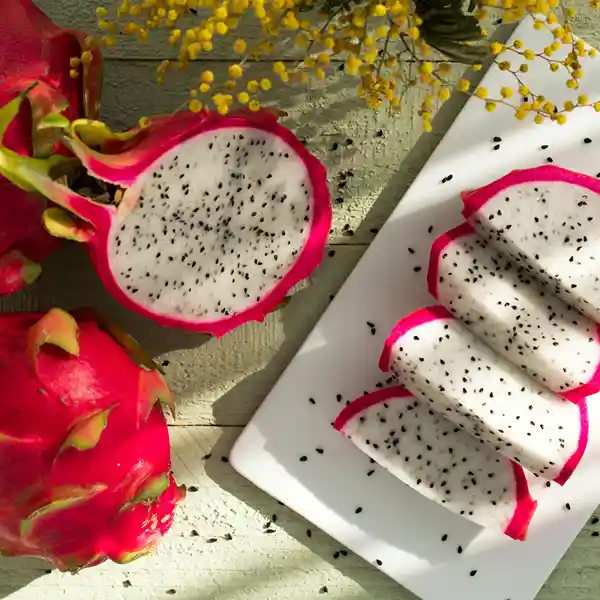
Dragon fruit, also known as pitaya (Hylocereus species), is a striking tropical fruit recognized for its vibrant pink or yellow skin and white or red flesh dotted with tiny black seeds. The fruit has a mildly sweet flavor with subtle hints of kiwi and pear, paired with a juicy, refreshing texture. Its exotic appearance and delicate taste make it popular both as a fresh snack and as an eye-catching ingredient in smoothies, salads, and desserts. Dragon fruit’s unique look and nutritional benefits have contributed to its rising popularity worldwide.
Growing Method
Dragon fruit grows on climbing cacti that thrive in warm, arid, and subtropical climates. It requires well-drained soil, moderate watering, and plenty of sunlight to produce healthy fruits. The plants benefit from support structures like trellises or fences for optimal growth. Dragon fruit flowers bloom overnight and are pollinated by bats or moths; hand pollination is often used in cultivation to ensure fruit set. Fruit matures in 30–50 days after flowering, depending on the variety and growing conditions.
Nutritional Value
Dragon fruit is low in calories but rich in essential nutrients including vitamin C, calcium, magnesium, and iron. It provides dietary fiber and antioxidants such as betalains and flavonoids that help combat oxidative stress and inflammation. The fruit supports digestion, boosts the immune system, and promotes healthy skin. Dragon fruit’s hydration properties and nutrient density make it an excellent addition to a balanced, health-conscious diet.
Culinary Use
Dragon fruit is enjoyed fresh, either sliced or scooped out, and often added to fruit salads, smoothie bowls, and desserts for its vibrant color and mild flavor. Its seeds add a pleasant crunch similar to kiwi. The fruit can also be blended into juices, sorbets, or cocktails. Dragon fruit pairs well with tropical flavors like mango, coconut, and pineapple, as well as citrus and mint. Due to its subtle taste, it is often used as a refreshing complement rather than a dominant flavor in recipes.
Storage & Care
Whole dragon fruit should be stored at room temperature and consumed within a few days for peak freshness. Refrigeration can extend shelf life up to one week but may slightly affect texture. Once cut, dragon fruit should be kept in an airtight container in the refrigerator and used within 1–2 days to prevent drying out. Avoid freezing fresh dragon fruit, as it can alter texture and flavor. Handle the fruit gently to avoid bruising, which can accelerate spoilage.