
Description
Description
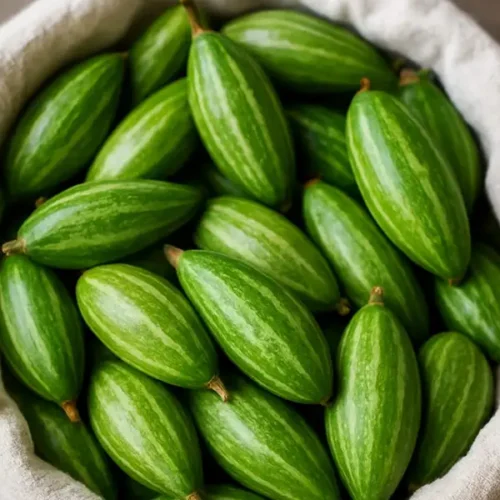
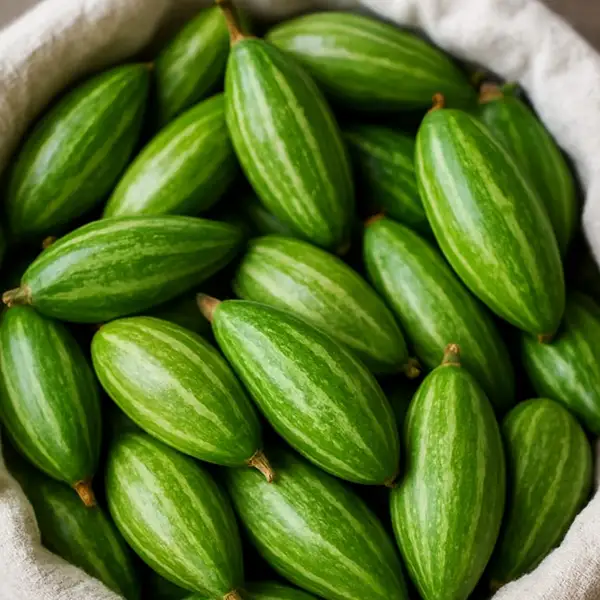
Pointed gourd, locally known as potala or potal, is a slender, tapering green vegetable with light and dark green stripes. Common in Eastern and Northern India, it has tender, white flesh with soft seeds inside. Potala has a mild, slightly sweet flavor and is appreciated for its lightness and ease of digestion. It is widely used in traditional Indian cooking, especially in Bengali, Odia, and Bihari cuisines. Its cooling nature and subtle taste make it suitable for both everyday meals and festive preparations.
Growing Method
Pointed gourd is a perennial climber grown mainly in tropical and subtropical regions. It prefers well-drained, loamy soil rich in organic matter and grows best in warm temperatures with ample sunlight. Propagation is done through vine cuttings rather than seeds, as potala rarely produces viable seeds. The plant requires support or trellising to climb and spread. Regular watering and occasional manuring support healthy fruiting, and harvesting begins around 80–100 days after planting.
Nutritional Value
Pointed gourd is low in calories and rich in dietary fiber, making it ideal for digestive health. It contains essential nutrients like vitamin C, vitamin A, potassium, magnesium, and antioxidants. It is known for its detoxifying properties and is often recommended in light or satvik diets. Regular consumption may help manage blood sugar, reduce cholesterol, and promote overall gut health.
Culinary Use
Potala is used in a variety of Indian dishes including curries, stir-fries, stuffed preparations, and lentil-based stews. In Bengali and Odia cuisines, it is often cooked with mustard, poppy seeds, or posto, and paired with potatoes or lentils. It can be deep-fried, sautéed, or cooked in light gravies. Its mild flavor absorbs spices well, making it suitable for both spicy and subtle dishes. It is also a popular choice in fasting or sattvic meals due to its lightness.
Storage & Care
Store pointed gourd in a cool, dry place or refrigerate in a perforated bag. It stays fresh for up to 4–5 days. Avoid washing before storage, as excess moisture can speed up spoilage. Check regularly and remove any spoiled ones to prevent spreading. For longer use, it can be blanched and frozen, although fresh potala offers the best texture and taste.