
Description
Description
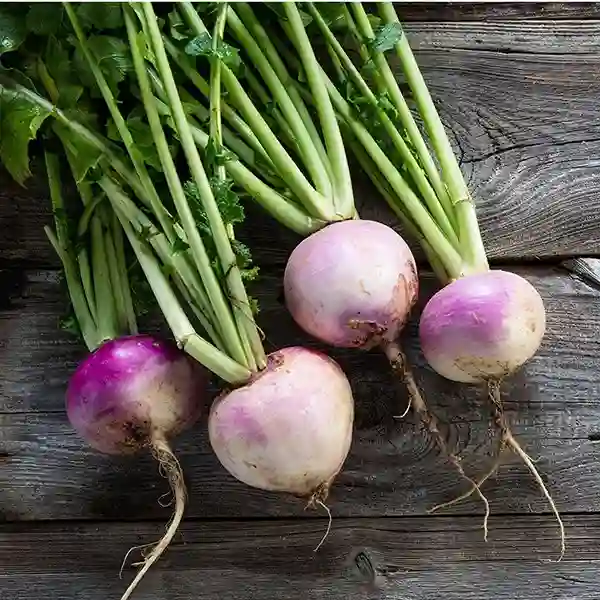
Turnip (Brassica rapa), locally known as Salgam, is a root vegetable with a round or slightly elongated shape. Its skin ranges from white to purple at the top, while the interior flesh is firm and white. Turnips have a mildly sweet and peppery flavor when raw, which becomes tender and slightly nutty when cooked. Both the root and the green leafy tops are edible, with the leaves offering a slightly bitter taste. Turnips are popular in Indian, European, and East Asian cuisines, used in curries, stews, soups, and pickles, and are valued for their versatility, nutritional benefits, and earthy flavor.
Growing Method
Turnips thrive in cool-season climates and prefer well-drained, fertile soil with a pH of 6.0–7.5. They are typically grown from seeds sown directly in the field. The plants require consistent moisture and adequate sunlight to develop smooth, tender roots. Proper spacing is important to prevent crowding and promote uniform growth. Turnips grow quickly and are usually ready for harvest 1–2 months after sowing, depending on the variety. The leaves can be harvested earlier for cooking, while roots are collected once they reach the desired size.
Nutritional Value
Turnips are low in calories and high in dietary fiber, making them excellent for digestion and weight management. They are rich in vitamin C, potassium, calcium, and antioxidants, which support immunity, heart health, and bone strength. The leaves are also nutritious, containing vitamins A, C, and K, and iron. Turnips have a low glycemic index, making them suitable for diabetic diets, and their fiber content helps regulate blood sugar and cholesterol levels.
Culinary Use
Turnips are versatile and can be cooked in a variety of ways. They can be boiled, roasted, steamed, or stir-fried. In Indian cuisine, turnips are used in curries, parathas, pickles, and sabzis. They can also be added to soups, stews, and mixed vegetable dishes. The leaves are often sautéed with spices or added to dals. Turnips pair well with garlic, ginger, cumin, mustard seeds, turmeric, and chili. Their slightly sweet and earthy flavor allows them to complement both mild and spicy dishes, and they retain a tender texture when cooked properly.
Storage & Care
Fresh turnips should be stored in a cool, dark, and ventilated place or in the refrigerator’s vegetable compartment. Whole roots can last for 2–3 weeks when kept in perforated plastic bags. Avoid washing before storage, as moisture can accelerate spoilage. The leaves should be separated from the roots and used within a few days. Overripe or soft turnips should be discarded. For long-term use, turnips can be blanched and frozen or pickled. Proper storage preserves their flavor, texture, and nutritional quality.